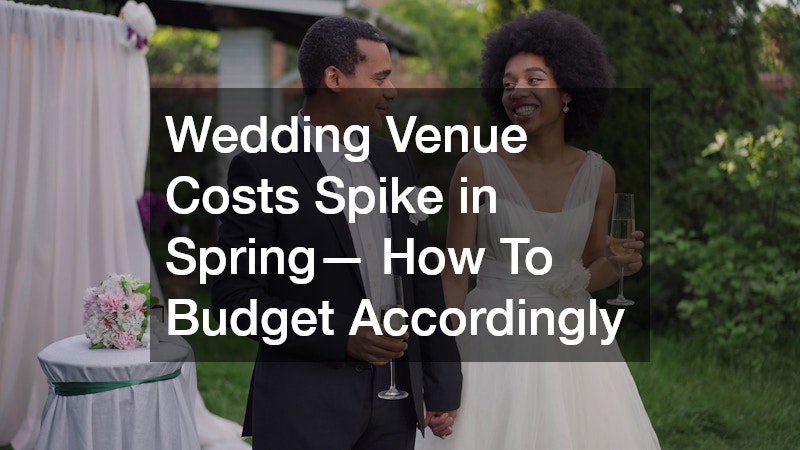
Spring is the most popular season for weddings, and that popularity comes with a price tag. Venues, vendors, and everything in between tend to raise their rates between March and June simply because demand is highest then. If you are planning a spring wedding, understanding where those extra costs come from can help you protect your budget before you sign a single contract. This guide breaks down the biggest spring price spikes and how to plan around them wisely.

Why Spring Demand Drives Up Venue Pricing
Spring weddings book up fast because the weather is mild, gardens are blooming, and couples want photos that do not require heavy coats or umbrellas. This surge in demand means venues can charge premium rates for the most desirable Saturdays, sometimes 20 to 30 percent more than off season pricing. Popular wedding venues often require deposits months, or even a year, in advance to lock in a spring date at a reasonable rate.
Because so many couples compete for the same weekends, flexibility becomes your biggest money saving tool. Booking a Friday or Sunday instead of a Saturday, or choosing early March over late May, can shave a meaningful amount off your total venue cost. Ask venues directly about their seasonal pricing structure so you know exactly what premium you are paying for a peak date.
Comparing Traditional Halls With Multipurpose Event Spaces
Not every couple needs a dedicated wedding venue to have a beautiful celebration. A party event venue that hosts corporate functions, galas, and private parties throughout the year often has more flexible pricing during peak wedding months because weddings are not their only revenue stream. These spaces can sometimes offer better rates in March through June since they are not solely dependent on wedding bookings to fill their calendar.
When comparing options, ask what is included in the rental fee versus what requires an additional charge. Some spaces bundle tables, chairs, and basic linens into the price, while others charge separately for every item.
- Ask if the venue offers a discount for weekday or daytime events
- Confirm whether setup and teardown time is included in the rental window
- Check if outside catering is allowed or if you must use an in house provider
- Find out if there is a required minimum guest count for spring dates
Budgeting for Catering and Menu Tastings
Food costs climb in spring right alongside venue fees, largely because caterers and restaurants are booked solid with wedding tastings and events. Per-plate pricing during peak months often runs 15-20% higher than off-season rates, and many venues require a food and beverage minimum that can range from $10,000 to $50,000 depending on guest count and location. Booking your tasting appointment now, rather than waiting until you’ve locked in a venue, can help you compare pricing before spring demand pushes menus and minimums even higher.
If you want a specific cuisine, such as one of the many Italian restaurants known for handmade pasta and wood fired entrees, reach out early since their event calendars fill up quickly during peak season. Ask about tasting fees upfront, as some venues charge $75-150 per person for a private tasting, while others waive the fee once you sign a contract. It’s also worth asking whether substitutions are possible for guests with dietary restrictions, since custom accommodations can add unexpected line items to your final invoice. Some couples are surprised to learn that the best restaurant in town for date night catering may have a completely different, more limited menu for large events.
Banquet kitchens often scale back to dishes that hold up well for 100-plus servings, which means the intimate dinner that won you over may not translate directly to your reception. Requesting a sample of the actual wedding menu, rather than relying on the restaurant’s everyday reputation, ensures there are no surprises when your guests sit down to eat.
Scheduling your tasting appointment well ahead of your date—ideally three to four months before booking, and ninety days before the wedding at the latest—gives you more room to negotiate pricing and make substitutions. Caterers booked solid for spring weekends often have less flexibility to accommodate special requests once their calendar fills up, so early tastings put you first in line for menu customization.
Ask about seasonal ingredient availability, since spring menus often shift based on what is fresh and locally sourced at that time of year. Items like asparagus, peas, ramps, and strawberries tend to be cheaper and more flavorful in spring, while ingredients shipped from elsewhere carry premium pricing that adds up across 100-plus guests. Bring cost specifics into the tasting itself. Ask for per-plate pricing broken down by protein choice, since chicken, fish, and beef options can vary by $15 to $30 per person, and clarify whether taxes, service charges, and gratuity are included in quoted numbers or added afterward.
Finally, discuss substitution policies for dietary restrictions and vendor minimums. Some caterers charge extra for gluten-free or vegan plates, while others build it into the base price—knowing this upfront helps you compare quotes accurately across venues.
Planning Around Vendor Kitchen and Equipment Demands
Behind the scenes, caterers and venues rely heavily on functioning kitchen equipment to pull off back to back spring events without a hitch. A busy season means ovens, refrigeration units, and warming stations get used constantly, and any breakdown can cause serious delays. Venues that invest in regular restaurant equipment repair and maintenance schedules are generally more reliable during high volume months because they catch small issues before they become event day emergencies.
It is reasonable to ask a venue or caterer how they handle equipment failures during a busy weekend. A venue with backup plans, spare equipment, or a maintenance contract in place is less likely to leave you scrambling if something breaks the morning of your event.
Setting a Realistic Budget for Rings and Fine Jewelry
Spring is also engagement season, which means jewelry retail sales tend to climb sharply in the months leading up to summer proposals and spring weddings. Industry data consistently shows that proposal activity peaks between November and February, but the ripple effect on ring shopping, resizing, and matching wedding bands stretches well into April and May. This surge affects pricing and availability, particularly for popular diamond engagement ring styles that are already in high demand, like classic round or oval solitaires in the one- to two-carat range. When demand spikes, jewelers have less incentive to negotiate on price, and popular cuts, settings, and carat weights can sell out or face longer sourcing delays. Custom designs are especially vulnerable, since stone-cutting and setting work often requires four to eight weeks of lead time even under normal conditions. Waiting until the last minute can leave you choosing from a picked-over selection or paying a rush fee to meet your date. Shopping a few months ahead of your target date gives you more selection and negotiating room before inventory tightens up.
Consider setting your jewelry budget as a fixed percentage of your total wedding spend—many financial advisors suggest keeping rings and fine jewelry to around 3-5% of overall costs—so you can compare options calmly rather than scrambling under seasonal pressure. Buying off-peak, in late summer or early fall, can also mean better deals as retailers work to move inventory before the next rush.
Rings and fine jewelry deserve the same budgeting attention as your venue, especially since spring is peak proposal and wedding season for jewelers too. Many retailers run seasonal promotions in January and February before the spring rush begins, often discounting 10-20% on select settings or offering complimentary upgrades like better metal grades. Timing your purchase slightly earlier can result in real savings on a diamond engagement ring, particularly if you’re flexible on the exact stone or setting style. Beyond the sticker price, ask about custom sizing timelines, since busy seasons can extend the wait for resizing or engraving services from a few days to several weeks. Some jewelers also charge rush fees during peak months, so locking in your order early can help you avoid those extra costs.
Factor these delays into your overall wedding planning schedule, especially if you need the ring finalized before an engagement party or bridal shoot. It’s also worth budgeting for insurance and maintenance, which many couples overlook. A basic jewelry insurance policy typically runs 1-2% of the ring’s value annually, while routine cleanings and prong checks may be free or low-cost if purchased through the original retailer.
Coordinating Hair and Beauty Appointments Early
Beauty professionals are some of the busiest people in the wedding industry come springtime, and booking trials late can leave you with limited options. A hair salon that specializes in bridal updos may only take a handful of wedding bookings per weekend, so reaching out three to six months ahead is a smart move. Popular Saturdays in April, May, and June often book solid by January, so don’t wait until you’ve finalized every other detail to make the call. When you reach out, ask about trial run pricing, how far in advance they recommend scheduling the actual wedding-day appointment, and whether they travel on-site or require you to come into the salon. Many stylists charge $75 to $200 for a trial, and some apply that fee toward your final booking if you commit that day.
It’s also worth asking whether they’ve worked with your hair type or the specific look you’re after, since not every hair salon has experience with extensions, textured hair, or intricate braided styles. If your preferred stylist is unavailable on your date, ask for referrals to a trusted local hair salon that handles bridal parties regularly. Local salons often maintain informal networks and can point you toward colleagues with matching availability and skill sets. Don’t overlook makeup artists in this same timeline either—many book alongside hairstylists and face the same seasonal crunch, so pairing your inquiries can save you a second round of scrambling later.
Trial runs are worth the extra cost, especially during a season when humidity and outdoor venues can affect how long a hairstyle holds. Budget $75 to $200 for a hair trial and $50 to $150 for a makeup trial, and treat these as non-negotiable line items rather than optional extras. Schedule your trial four to six weeks before your actual wedding date rather than months in advance, since hair texture and length can change over time.
This window gives you enough buffer to adjust a cut, color, or product routine without leaving styling decisions until the last minute. Book your hairstylist and makeup artist as soon as you lock in your venue and date, since top spring vendors can fill up six to nine months ahead. When you inquire, ask specifically how they handle humidity, outdoor heat, or an unexpected spring shower, and whether their pricing includes touch-up kits for the reception. If your wedding party is getting styled onsite, confirm how many chairs and outlets the venue provides, since some spring venues limit vendor access before a certain hour. Building this logistical detail into your budget conversation now can prevent costly rebooking fees later.

Timing Your Booking to Avoid Peak Rate Increases
One of the simplest ways to control spring wedding costs is to lock in vendors and venues during their slower months. Many venues and vendors offer their lowest rates for bookings made in late fall or winter, well before the spring rush begins. Signing contracts early not only secures better pricing but also gives you first pick of preferred dates and vendors.
- Request a written quote that includes all seasonal fees upfront
- Ask if prices are locked in once a deposit is paid or subject to change
- Compare quotes from at least three vendors before committing
- Look into off peak days within the season, such as a Thursday evening
Building a Contingency Fund for Unexpected Costs
Even the most carefully planned spring wedding budget needs a cushion for surprises, since peak season often brings unpredictable price adjustments. A general rule of thumb is to set aside an additional 10 to 15 percent of your total budget for last minute changes, weather related adjustments, or vendor substitutions. This buffer can cover anything from a rescheduled outdoor ceremony to an unexpected rental fee increase, or even a last minute stop at jewelry stores to replace a lost ring or accessory before the big day.
Keep a running list of every contract and payment deadline so nothing slips through the cracks during a busy planning season. Reviewing your budget monthly, rather than only at the start, helps you catch cost creep before it becomes a bigger problem closer to your date.
Spring weddings are beautiful, but the season’s popularity means every part of your budget deserves extra attention, from the venue deposit to the final vendor payment. By researching pricing trends early, comparing multiple venues and vendors, and building in a financial cushion, you can protect yourself from the seasonal price spikes that catch so many couples off guard. Start your research now, ask direct questions about seasonal pricing, and lock in the vendors you love before their calendars fill up.